
What is PCA?
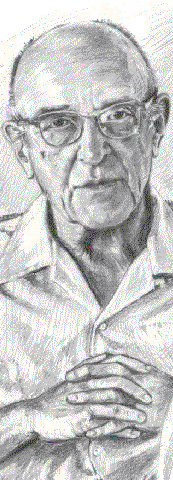
The Person-Centred Approach (PCA) is a psychological and psychotherapeutic approach developed by Carl R. Rogers. It is recognized worldwide and supported by decades of empirical research.
The Core Idea
At the heart of PCA lies the concept of the actualizing tendency - a fundamental energy present in every living being, pushing toward growth and fulfillment. We naturally move toward becoming more fully ourselves.
However, this tendency can be blocked, damaged, or prevented from its natural expression. When a person cannot be who they truly are - when there's a gap between their authentic self and their lived experience - psychological distress arises.
The Role of the Therapist
The therapist's role is not to fix, advise, or direct. Instead, it is to create a climate that allows the client's actualizing tendency to flourish again - so the person can return to harmony with themselves.
This climate is created through the quality of the therapeutic relationship, characterized by three core attitudes:
Authenticity
The therapist is present as a real person, not hiding behind a professional facade.
Unconditional Positive Regard
The person is always accepted as a growing being - behavior may be questioned, but the person's worth is never in doubt.
Empathy
The therapist strives to understand the client as completely as possible and to communicate this understanding.
Becoming a Person-Centred Therapist
Training takes 4-5 years and involves experiencing the helping position in various sessions and situations. The future therapist learns to know their own reactions and to work on their own process of being a person - rather than influencing clients with personal values, fears, or opinions.
Being a therapist is a lifelong learning process.
Links
The PCA is represented in Europe by PCE Europe and worldwide by the WAPCEPC. I also encourage you to read a book by Carl Rogers - his writings are remarkably clear and accessible.
Ready to take the first step?
I'm happy to answer your questions or schedule a first session.